Free printables
29 print-ready sheets for the ground, in four kinds: reference sheets that quote their sources — airspace and the ATC system, radio calls, documents and inspections, NTSB reporting, the aeromedical rules, the METAR and TAF codes — word for word instead of summarising them; fill-in worksheets, from personal minimums to weight and balance to a full cross-country navlog; CFI material for endorsements, practice orals, and the pre-solo knowledge test; and a Pilot/Controller Glossary sheet for each certificate, every definition in the FAA’s own words. Free, no signup — read them here, print them, mark them up, use them in lessons.
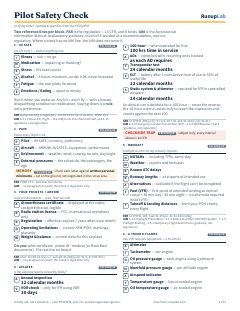
Pilot Safety Check
PilotEight preflight mnemonics in flying order — IM SAFE, PAVE, ARROW, AV1ATES, NWKRAFT, A TOMATO FLAMES, FLAPS, SAFETY — each carried back to the regulation it comes from, with AIM guidance kept on its own line so it never reads as a rule.
Read or printCurrency & Experience Audit
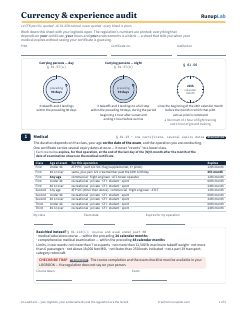
PilotWork down it with your logbook open: medical duration by class and age, the flight review and the four things that satisfy it, day and night passenger currency, and the § 61.109 experience buckets — plus five things about all of it that get stated wrongly constantly.
Read or printACS Maneuver Tolerances
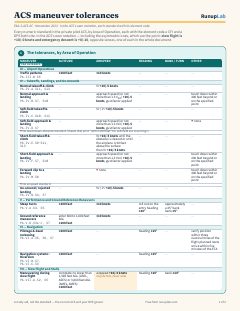
StudentEvery numeric standard in FAA-S-ACS-6C by Area of Operation, each with its element code, in the ACS's own notation — including the three cells cheat sheets routinely get wrong, and the four numbers commonly printed that the ACS does not contain at all.
Read or printAirspace: Entry, Equipment, Minimums
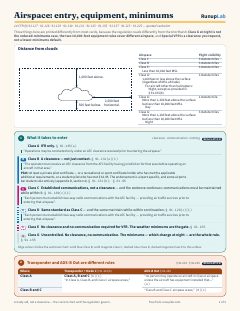
PilotWhat it takes to enter Class A through G, what equipment each demands, the speed limits, the complete § 91.155 weather-minimums table cell for cell, and Special VFR — a clearance you request, not a lower-minimums default — including the Class G night rows that are identical to Class C, D and E, and the two 10,000-foot equipment rules that are not the same rule.
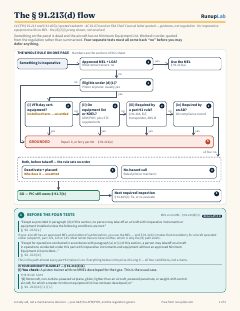
Read or printThe § 91.213(d) Flow
PilotSomething on the panel is dead and there is no MEL. The rule worked in order — which path you are on, whether the aircraft qualifies, the four separate tests that must all come back “no”, then placard and record — every step quoted verbatim, plus an honest account of the one test the regulation does not settle.
Read or printPPL Checkride Ready
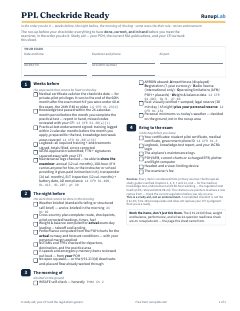
StudentThe run-up before your checkride: everything to have done, current, and in hand before you meet the examiner — your paperwork, the airplane's, the night before, the morning of. Tick it off here or print it.
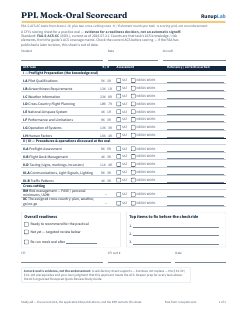
Read or printMock-Oral Scorecard
CFIA CFI's scoring sheet for a practice oral, laid out by ACS Area of Operation with each task's knowledge and risk element counts. Score each task, note the deficiency, and make a readiness call backed by evidence.
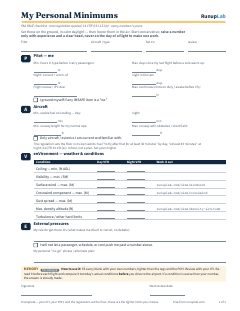
Read or printPersonal Minimums Sheet
PilotA fill-in worksheet organized on the FAA PAVE checklist — pilot currency, aircraft, a day/night table for ceiling, visibility, wind, crosswind and density altitude, and external pressures. Fill it in on screen, or print it blank.
Read or printVFR Quick Reference
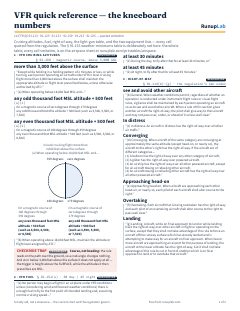
PilotThe kneeboard numbers: § 91.159 cruising altitudes, § 91.151 fuel, § 91.113 right-of-way in the rule's own order, the full § 91.125 light-gun table, and the § 91.215/§ 91.225 airspace lists kept apart.
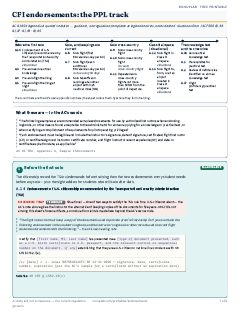
Read or printCFI Endorsements: The PPL Track
CFIEvery endorsement from pre-solo to practical test in AC 61-65K's own words — appendix number, the FAR each satisfies, and what expires when, cited to the rule.
Read or printNight Ops: The Three Nights
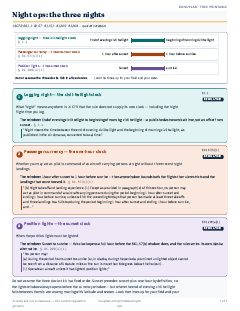
PilotLogging night time, night passenger currency, and position lights run on three different clocks — § 1.1, § 61.57(b), § 91.209 — each quoted verbatim, with night fuel and equipment alongside.
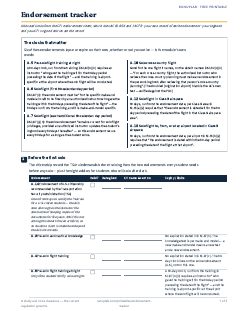
Read or printEndorsement Tracker
StudentThe student-side record of the CFI endorsement sheet: which endorsements you hold, who gave them, and which ones lapse on their own — the solo endorsement's clock and the per-flight solo cross-country — straight from the same cited data.
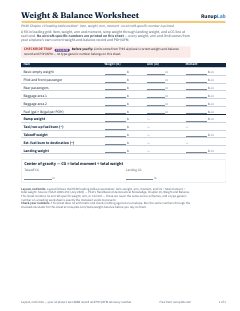
Read or printWeight & Balance Worksheet
StudentA fill-in W&B grid for any trainer — stations, arms, moments, ramp through landing weight, and a CG line — with the limits left where they belong: in your airplane's own records. Check your numbers against the live W&B tool.
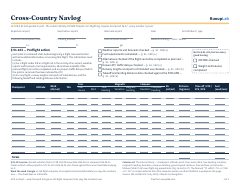
Read or printCross-Country Navlog
StudentA fill-in navlog for the classic paper flow — checkpoints, the full wind-triangle column run, times and fuel — with § 91.103's preflight-action requirement quoted at the top and the E6B one tab away.
Read or printThe ATC System
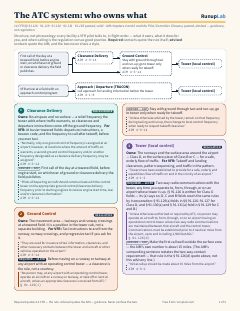
PilotWho you're talking to, facility by facility — what each one owns, what it does for VFR traffic, and when calling is the regulation versus good practice, with the required/advised line drawn in the sources' own words.
Read or printATC Phraseology
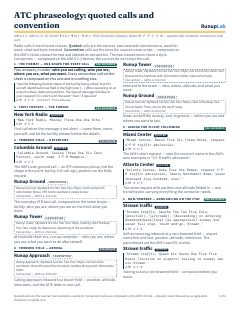
StudentRadio calls in two honest columns: the ones the AIM and AC 90-66C actually script, quoted word for word — and the conventional calls they don't, composed on the AIM's own format and labeled as convention, never dressed up as regulation.
Read or printFlight Service Today
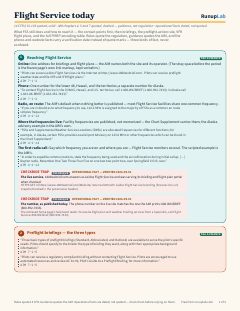
PilotWhat FSS still does and how to reach it — briefing types in the AIM's own words, filing and closing VFR flight plans, and the full PIREP encoding table, with the phone-and-website facts dated instead of dressed up as rules.
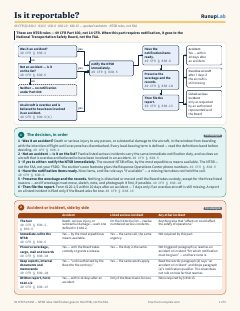
Read or printIs It Reportable?
PilotNTSB Part 830, quoted: what counts as an accident or a listed incident, the immediate-notification list item for item, what “substantial damage” excludes, wreckage preservation, and the report that follows — the sheet to have before you need it.
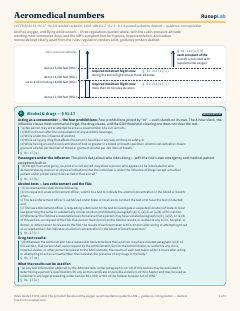
Read or printAeromedical Numbers
PilotAlcohol, oxygen, and flying while unwell — § 91.17, § 91.211 and § 61.53 quoted in full, with the cabin-pressure-altitude wording most summaries drop, and the AIM's symptom lists kept clearly apart from the rules.
Read or printDocuments & Inspections
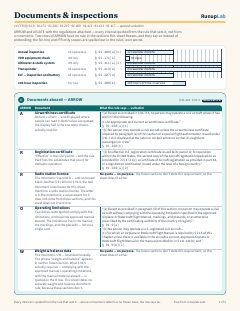
PilotARROW and AV1ATE with the regulations attached: what has to be aboard, what has to have been inspected and when, which rows are for-hire or IFR only — every interval quoted from the rule that sets it, not from a mnemonic.
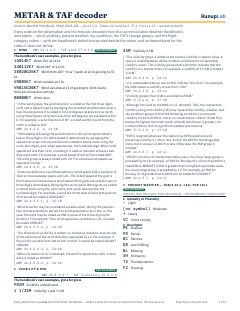
Read or printMETAR & TAF Decoder
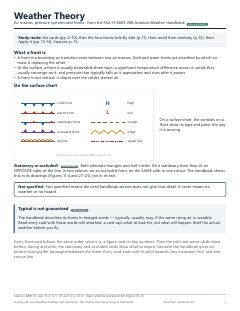
StudentEvery code on the observation and the forecast — wind, visibility, weather, sky, TAF change groups, flight categories — decoded from the current Aviation Weather Handbook's own tables, with an honest list of the codes it doesn't define.
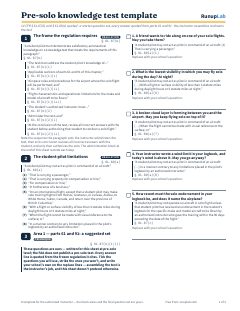
Read or printPre-Solo Test Template
CFIThe pre-solo knowledge test as § 61.87(b) actually frames it: the three required areas quoted, the student-pilot limitations item for item, a starter set of general-regulation questions with cited answers you can strike or keep — and blank blocks for the parts only your airport and your airplane can fill.
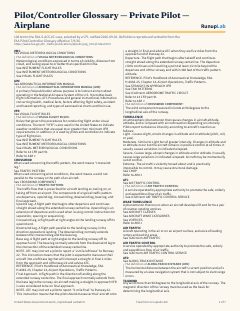
Read or printGlossary: Private Pilot
PilotThe 108 Pilot/Controller Glossary terms FAA-S-ACS-6C uses, chosen by a CFI — every definition in the FAA's own words, as a printable sheet and a flashcard deck.
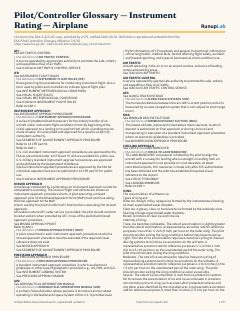
Read or printGlossary: Instrument Rating
PilotThe 110 Pilot/Controller Glossary terms FAA-S-ACS-8C uses, chosen by a CFI — approach, clearance and separation language in the FAA's own words, printable or as flashcards.
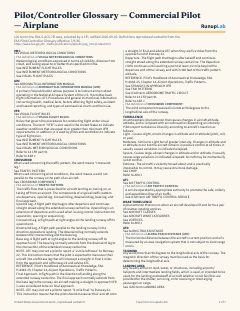
Read or printGlossary: Commercial Pilot
PilotThe 102 Pilot/Controller Glossary terms FAA-S-ACS-7B uses, chosen by a CFI — the vocabulary the commercial standard assumes you already speak, verbatim.
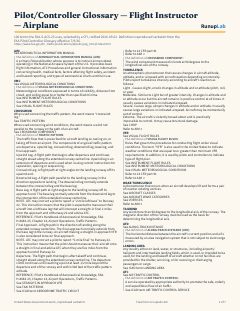
Read or printGlossary: Flight Instructor
CFIThe 100 Pilot/Controller Glossary terms FAA-S-ACS-25 uses, chosen by a CFI — the terms you will be asked to define, in the words the FAA defines them with.
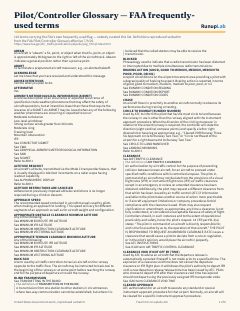
Read or printGlossary: FAA Frequently-Used Terms
PilotThe 116 terms the FAA itself flags as frequently used — nobody curated this list, which is the point. Verbatim definitions, printable, and a deck to drill them.
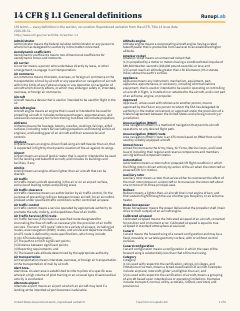
Read or printGlossary: 14 CFR § 1.1 Definitions
PilotAll 195 terms the regulations define for themselves — night, pilot in command, category, class, flight level — straight from the eCFR, verbatim, as a two-column sheet and a deck.
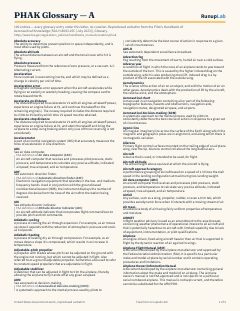
Read or printGlossary: PHAK, Letter by Letter
StudentThe Pilot's Handbook of Aeronautical Knowledge glossary — 864 entries, the vocabulary of the knowledge test — as one printable sheet and one deck per letter, the handbook's own words.
Read or printEach sheet names the source behind its claims, and wherever a source is quoted the sheet names the edition the words came from — for the regulations, the AIM pages and Pilot/Controller Glossary letters, the advisory circulars, and the Aviation Weather Handbook, down to the date the text was retrieved and frozen. Check anything here against the current primary source before you rely on it — that is what the citations are for.